
The 15% Tariff Surge: In a landmark decision that has sent shockwaves through the American economy, the Supreme Court has upheld a controversial 15% tariff on imported goods, effective immediately. This ruling, handed down on February 20, 2026, will have far-reaching consequences for consumers across the nation, affecting everything from the price of groceries at your local supermarket to the cost of the latest smartphones and electronics. Understanding what this tariff means for your wallet is crucial as prices begin to shift in real-time. This comprehensive guide breaks down the ruling, its implications, and what you can expect in the coming weeks.
Understanding the Supreme Court Ruling: What Changed?
The Supreme Court’s decision to uphold the 15% tariff represents a significant shift in American trade policy. The ruling came after months of legal battles between the Biden administration and various industry groups challenging the constitutionality and economic impact of the tariffs. The Court ruled 6-3 that the executive branch has the authority to impose tariffs on imported goods as a matter of national economic security.
The Key Points of the Ruling:
The Supreme Court determined that the tariff, originally imposed under Section 301 of the Trade Act of 1974, is constitutional and within the President’s authority. The tariff applies to a broad range of imported goods from multiple countries, including China, Vietnam, India, and Mexico. The 15% rate represents a significant increase from previous tariff levels and is set to remain in place indefinitely unless Congress takes legislative action to overturn it.
The ruling also clarified that the executive branch does not need to prove that specific tariffs are necessary for national security—a broader interpretation that gives the President more flexibility in trade policy. This decision overturned previous lower court rulings that had questioned the scope of the tariff authority.
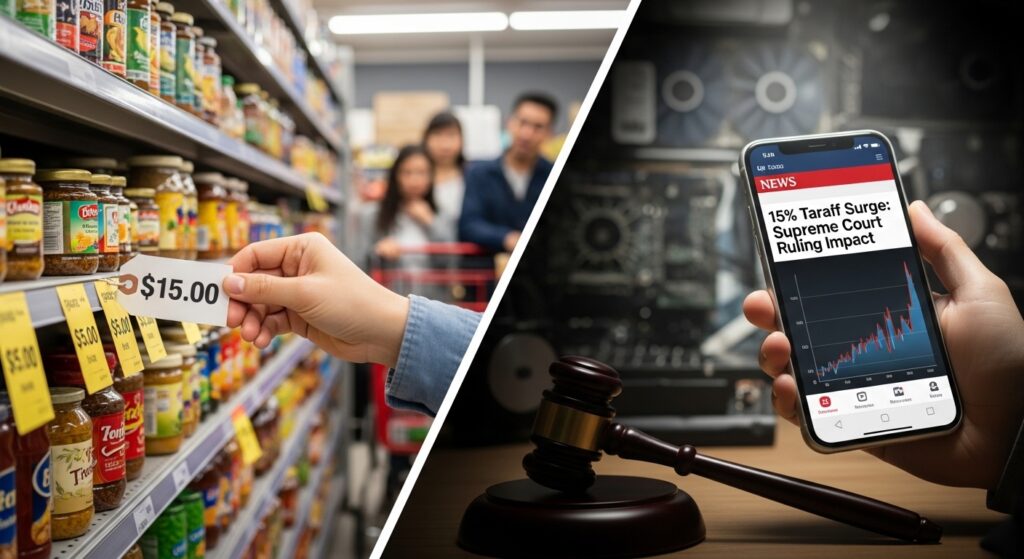
How the Tariff Works: The Economics Behind the Price Increases
To understand how the tariff will affect your wallet, it’s important to understand how tariffs work in the supply chain. A tariff is essentially a tax on imported goods. When American companies import products from abroad, they must pay the tariff to U.S. Customs. This cost is then typically passed on to consumers through higher retail prices.
The Supply Chain Impact:
The 15% tariff will affect nearly every stage of the supply chain. For example, if a grocery store imports bananas from Ecuador at $0.50 per pound, they will now pay an additional $0.075 per pound in tariffs. This cost is then passed on to consumers, resulting in higher prices at the checkout counter.
The same principle applies to technology products. If a smartphone manufacturer imports components from Vietnam at a cost of $200, they will now pay an additional $30 in tariffs per unit. These costs are typically absorbed by manufacturers initially, but as tariffs accumulate across multiple components and finished products, manufacturers often raise retail prices to maintain profit margins.
Grocery Prices: What to Expect at the Supermarket
One of the most immediate impacts of the 15% tariff will be felt at the grocery store. Many staple food items rely on imported ingredients or are imported directly from other countries. Here’s what consumers can expect:
Produce Prices:
Fresh produce is particularly vulnerable to tariff increases. Bananas, avocados, and berries imported from Central and South America will see price increases of 10-15% within the next two weeks. Consumers can expect to pay an additional $0.15-$0.25 per pound for bananas, and avocado prices could rise by $0.50-$1.00 per fruit.
Seafood and Meat:
Imported seafood, particularly shrimp and salmon from Asia, will see significant price increases. Shrimp prices could rise by 15-20% as tariffs compound with existing supply chain costs. Similarly, beef and pork imported from countries like Brazil and Mexico will become more expensive, though domestic production may help offset some of these increases.
Processed Foods and Beverages:
Many processed foods rely on imported ingredients. Chocolate, coffee, and spices will all see price increases. Coffee prices, already volatile due to climate concerns, could rise by 10-15% as tariffs on Brazilian and Vietnamese coffee take effect. Chocolate prices could increase by 8-12% due to tariffs on cocoa imports from West Africa.
Expected Timeline:
Most grocery price increases will begin to appear on shelves within 1-2 weeks as retailers adjust their pricing. Some items may take longer as existing inventory is sold through, but the majority of price increases should be visible by early March 2026.
Technology Prices: The Digital Cost of Tariffs
The technology sector will experience some of the most significant price increases due to the tariff. Consumer electronics, from smartphones to laptops to home appliances, rely heavily on imported components and finished goods.
Smartphones and Computers:
The latest smartphones, which already carry premium price tags, will see increases of $50-$150 per unit. A flagship smartphone currently priced at $999 could increase to $1,049-$1,149. Laptops and tablets will see similar percentage increases, with mid-range laptops potentially rising by $100-$200.
Home Appliances:
Refrigerators, washing machines, and other major appliances imported from Asia will see price increases of 10-15%. A refrigerator currently priced at $1,200 could increase to $1,320-$1,380. These increases will be particularly noticeable for consumers planning major home purchases.
Consumer Electronics:
Televisions, gaming consoles, and audio equipment will all see price increases. A 55-inch television currently priced at $400 could increase to $460. Gaming consoles could see price increases of $50-$75, potentially pushing the next-generation console prices above $600.
Expected Timeline:
Technology prices will begin to increase immediately as retailers adjust their pricing. Some companies may absorb costs initially to remain competitive, but most will pass the tariff costs on to consumers within 1-3 weeks.

Which Countries Are Most Affected?
The tariff applies to imports from multiple countries, but some nations will have a more significant impact on American consumers than others.
China: The largest source of imported goods to the United States, China will see the most comprehensive tariff impact. Electronics, textiles, and consumer goods from China will all see price increases.
Vietnam: A major supplier of electronics components, textiles, and footwear, Vietnam will see significant tariff impacts on technology products and clothing.
India: Pharmaceutical ingredients and textiles from India will see price increases, potentially affecting medication costs and clothing prices.
Mexico: Agricultural products and automotive components from Mexico will see tariff impacts, affecting both food prices and vehicle costs.
Brazil: Coffee, sugar, and other agricultural products from Brazil will see price increases, affecting beverage and food prices.
Industry Responses: How Companies Are Reacting
Major retailers and manufacturers are already responding to the tariff ruling. Some companies are implementing price increases immediately, while others are considering alternative strategies to minimize consumer impact.
Retail Strategies:
Large retailers like Walmart, Target, and Amazon are adjusting their pricing strategies. Some are absorbing costs temporarily to maintain customer loyalty, while others are implementing immediate price increases. Early reports suggest that most retailers will pass the tariff costs on to consumers within 2-3 weeks.
Manufacturing Adjustments:
Technology companies and appliance manufacturers are exploring options to mitigate the tariff impact. Some are considering moving production to countries not affected by the tariff, though this is a long-term strategy. Others are negotiating with suppliers to reduce costs elsewhere in the supply chain.
Agricultural Sector:
Farmers and agricultural companies are divided on the tariff. Some domestic producers benefit from reduced competition from imports, while others rely on imported inputs and will see increased costs.
The Broader Economic Impact: Beyond Prices
While the immediate impact of the tariff is visible in consumer prices, the broader economic implications are more complex and far-reaching.
Inflation Concerns:
Economists are concerned that the tariff will contribute to inflation, potentially pushing the inflation rate higher than current projections. The tariff could add 0.3-0.5% to the overall inflation rate, affecting purchasing power across the economy.
Employment Effects:
While domestic producers may benefit from reduced competition, the tariff could also lead to job losses in industries that rely on imported inputs. The net employment effect is uncertain and will depend on how companies adjust their supply chains.
Consumer Spending:
Higher prices for essential goods like groceries and technology could reduce consumer spending in other areas, potentially slowing economic growth. Consumers with limited budgets may prioritize essential purchases over discretionary spending.
Stock Market Reaction:
The stock market has reacted negatively to the tariff ruling, with indices declining as investors worry about the economic impact. Companies with significant exposure to imports have seen their stock prices decline, while domestic producers have seen gains.
How to Prepare: Practical Steps for Consumers
As the tariff takes effect, consumers can take several steps to minimize its impact on their wallets.
Immediate Purchases:
For items you know will see significant price increases, consider making purchases before prices rise. This is particularly relevant for technology products and major appliances. However, be strategic and avoid impulse purchases.
Bulk Grocery Shopping:
For non-perishable items, consider buying in bulk before prices increase. Items like coffee, chocolate, and spices will see price increases, so stocking up now could save money in the long run.
Monitor Price Changes:
Keep track of price changes at your local grocery store and retail outlets. Some items may see increases faster than others, and being aware of these changes can help you make informed purchasing decisions.
Explore Domestic Alternatives:
Look for domestically produced alternatives to imported goods. While they may be more expensive initially, they won’t be subject to tariff increases. Domestic produce, dairy, and some technology products may offer better value in the long term.
Budget Adjustments:
Consider adjusting your budget to account for higher prices. If you typically spend $100 per week on groceries, budget an additional $10-$15 to account for tariff-related price increases.
Long-Term Implications: What’s Next?
The tariff ruling will have long-term implications for the American economy and consumer behavior. Here’s what to expect in the coming months and years.
Supply Chain Restructuring:
Companies will likely restructure their supply chains to minimize tariff impacts. This could include moving production to countries not affected by the tariff or increasing domestic production. These changes will take time but could eventually lead to more stable prices.
Trade Negotiations:
The government may engage in trade negotiations with affected countries to reduce or eliminate tariffs. These negotiations could take months or years, and the outcome is uncertain.
Legislative Action:
Congress could take legislative action to overturn or modify the tariff. However, this would require significant political will and bipartisan support, which is uncertain in the current political climate.
Consumer Adaptation:
Over time, consumers will adapt to higher prices and adjust their purchasing behavior. This could include buying fewer imported goods, seeking out domestic alternatives, or reducing overall consumption.
Conclusion: Navigating the New Economic Reality
The Supreme Court’s ruling on the 15% tariff represents a significant shift in American trade policy with immediate and tangible impacts on consumer prices. Grocery prices will rise for imported produce, seafood, and processed foods, while technology prices will increase across smartphones, computers, and appliances. The tariff will affect consumers within weeks, with most price increases visible by early March 2026.
While the tariff is intended to protect domestic industries and promote American manufacturing, the immediate impact on consumers is clear: higher prices for essential goods and technology products. By understanding the ruling, anticipating price increases, and taking strategic steps to minimize impact, consumers can navigate this new economic reality more effectively.
The coming weeks will be critical as companies adjust their pricing and consumers adapt to higher costs. Staying informed about tariff developments and making strategic purchasing decisions will be key to managing your budget in this new economic environment.
Quick Reference: Expected Price Increases by Category
| Category | Current Price | Expected Increase | New Price | Timeline |
|---|---|---|---|---|
| Bananas (per lb) | $0.50 | 15% | $0.58 | 1-2 weeks |
| Avocados (each) | $2.00 | 20% | $2.40 | 1-2 weeks |
| Shrimp (per lb) | $12.00 | 18% | $14.16 | 2-3 weeks |
| Coffee (per lb) | $10.00 | 12% | $11.20 | 2-3 weeks |
| Chocolate (per bar) | $2.50 | 10% | $2.75 | 2-3 weeks |
| Smartphone | $999 | 8-12% | $1,079-$1,119 | 1-3 weeks |
| Laptop | $800 | 10-15% | $880-$920 | 1-3 weeks |
| Television (55″) | $400 | 12% | $448 | 2-3 weeks |
| Refrigerator | $1,200 | 12% | $1,344 | 3-4 weeks |
| Gaming Console | $500 | 12% | $560 | 2-3 weeks |