
Total Lunar Eclipse in North Texas: Here’s When and How to See the “Blood Moon”: Looking for the Total Lunar Eclipse in North Texas? Find the exact times, dates, and best viewing spots in Dallas-Fort Worth for the upcoming Blood Moon.
Skywatchers in North Texas are in for a treat as a rare celestial event prepares to take center stage. A Total Lunar Eclipse, often called a “Blood Moon” due to its striking reddish hue, will soon be visible across the Dallas-Fort Worth metroplex and the surrounding North Texas region.
If you missed the Great American Solar Eclipse, this is your next big chance to witness the wonders of our solar system without needing any special safety glasses. Here is everything you need to know about when to look up, what to expect, and the best viewing spots in North Texas.
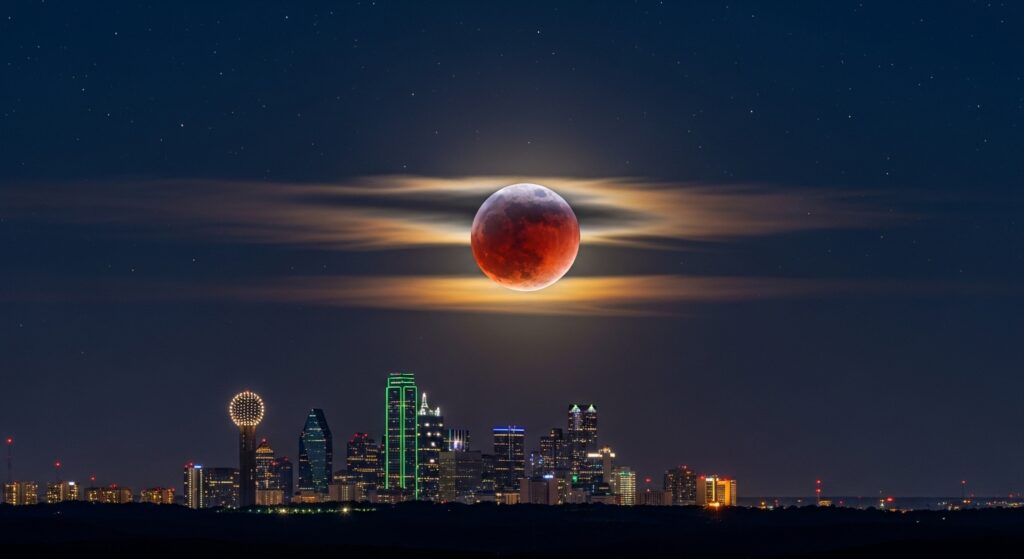
When is the Total Lunar Eclipse in North Texas?
The next total lunar eclipse visible in North Texas occurs in the early morning hours of Tuesday, March 3, 2026. While North Texans also witnessed a spectacular eclipse in March 2025, the 2026 event is particularly special as it is the final total lunar eclipse visible in our region until late 2028.
The Eclipse Schedule (Central Standard Time)
For those in Dallas, Fort Worth, Denton, and Plano, the eclipse will follow this timeline:
- 2:44 AM: Penumbral Eclipse Begins – The Moon begins to enter Earth’s outer shadow. You might notice a subtle dimming, but the real show hasn’t started yet.
- 3:50 AM: Partial Eclipse Begins – The Moon enters the Earth’s dark inner shadow (the umbra). A dark “bite” will appear to grow across the lunar surface.
- 5:04 AM: Totality Begins – This is the “Blood Moon” phase. The Moon is completely engulfed in Earth’s shadow and turns a deep coppery red.
- 5:33 AM: Maximum Eclipse – The peak of the event when the Moon is deepest in the shadow.
- 6:02 AM: Totality Ends – The Moon begins to exit the darkest part of the shadow.
- 6:55 AM: Moonset – In North Texas, the Moon will set just as the partial phase is ending, providing a beautiful “setting Blood Moon” on the western horizon.
Why Does the Moon Turn Red?
During a total lunar eclipse, the Earth sits directly between the Sun and the Moon. While Earth blocks direct sunlight, our atmosphere bends (refracts) some light around the edges of the planet.
This filtered light passes through Earth’s atmosphere, which scatters shorter blue wavelengths and allows longer red wavelengths to pass through—the same phenomenon that causes red sunsets. This red light is projected onto the Moon, giving it that eerie, beautiful crimson glow.
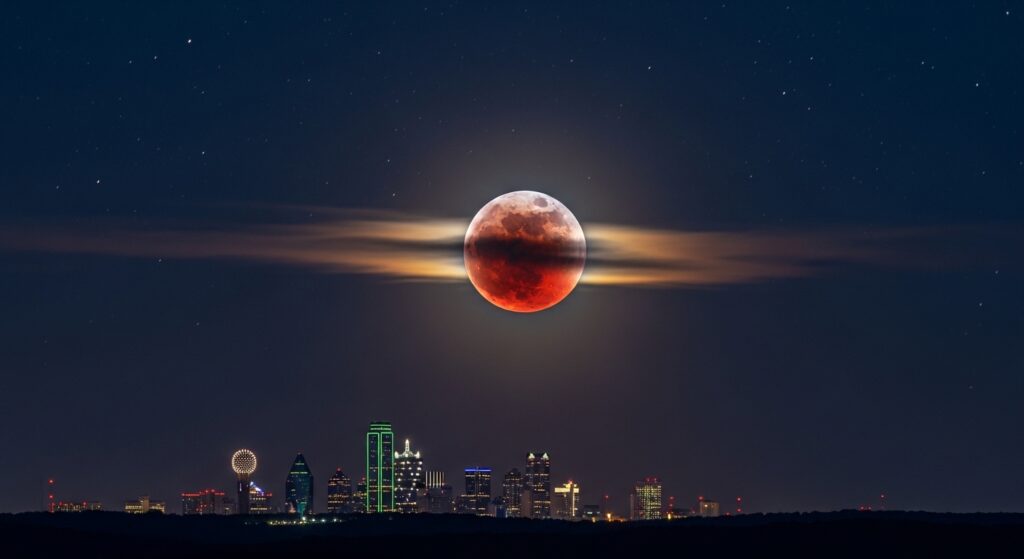
How to Watch the Eclipse in North Texas
Unlike solar eclipses, lunar eclipses are 100% safe to view with the naked eye. You do not need filters or special glasses.
Tips for the Best View:
- Find a Clear Western Horizon: Because the eclipse happens in the early morning, the Moon will be low in the western sky. Make sure you aren’t blocked by tall buildings or dense trees.
- Get Away from City Lights: While the Blood Moon is bright enough to see from downtown Dallas, a darker spot (like a local park or Lake Ray Hubbard) will make the stars around the eclipsed Moon pop.
- Use Binoculars: While not necessary, binoculars will help you see the craters on the Moon even while it is turned red.
- Check the Weather: March weather in North Texas can be unpredictable. Keep an eye on local forecasts for cloud cover updates.
Best Viewing Spots in North Texas
If you want to make an event of it, consider these popular stargazing spots:
- White Rock Lake (Dallas): Offers wide-open views of the sky.
- Tandy Hills Nature Area (Fort Worth): Elevated views away from the heaviest light pollution.
- Frisco Commons Park: Great for families with open fields.
- Lake Lewisville: The reflection of the red moon over the water makes for incredible photography.
When is the Next Eclipse?
If you miss this one, you’ll be waiting a while. After the March 2026 event, North Texas won’t see another total lunar eclipse until December 31, 2028. There will be a partial lunar eclipse in August 2026, but it won’t feature the iconic “Blood Moon” totality.